System Design and IT Infrastructure
09.03.01 Computer Science and Engineering
About
This program provides universal and sought-after competencies at the interface of design, development and integration of software and hardware complexes. You will learn not just how to write code, but how to create comprehensive, reliable and efficient systems - from low-level microprocessor solutions to scalable corporate information systems and intelligent interfaces.
This study direction combines deep knowledge of classical system engineering with advanced corporate development practices and elements of artificial intelligence.
A graduate of this program is not just a programmer or an administrator, but an architect of complex systems, capable of designing solutions in which program code interacts with hardware, network protocols, databases, and intelligent algorithms.
Program Description
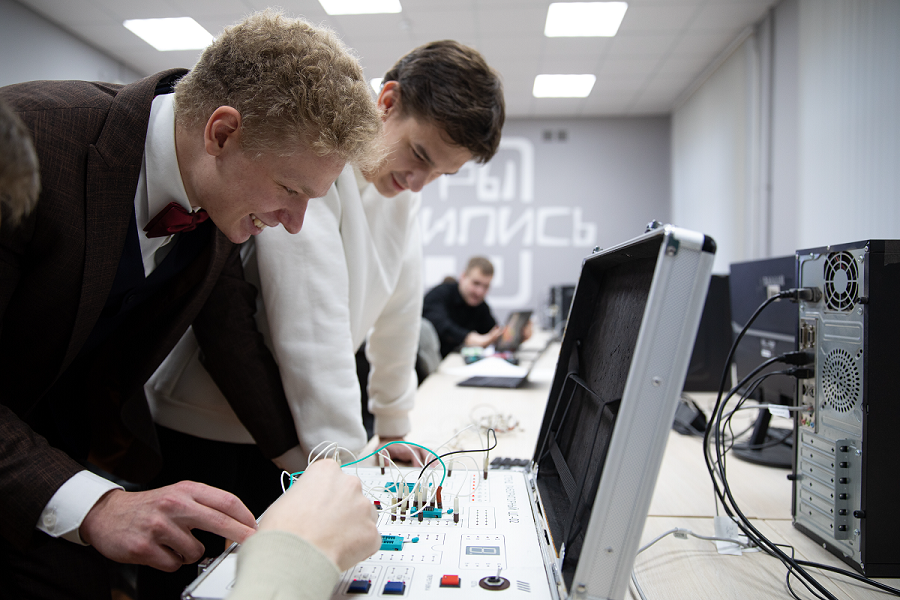
Students participate in research and team projects, case championships and hackathons from the first years of study, as well as doing internships at IT companies and leading enterprises of the region, gaining real-world experience in developing modern software systems.

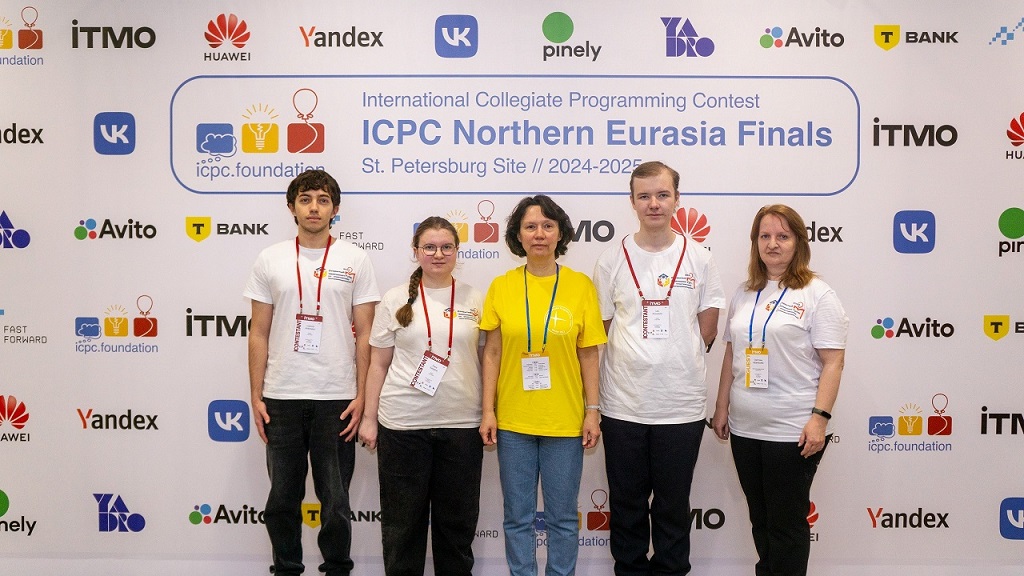
Graduate department provides training at the school of sports programming, it means participation in competitions both at national and international levels which helps to develop algorithmic thinking and skills to quickly solve complex problems.
Some of the specialized disciplines are taught by practitioners from the industry, forming students' sought-after professional competencies, including: M.S. Pestin (1st category Software Engineer at KBP JSC), V.G. Vedmetsky (Head of the Investment Projects and Innovations Department at TsKBA JSC), N.V. Neyelova (Director of R&D at Ingate Group).


Head of Program
Andriyanova Marina Aleksandrovna
Associate Professor of the Department of Computer Engineering, Candidate of Technical Sciences
She is the author of textbooks “Computer Science”, “General purpose operating systems”, “Basic techniques of working in Linux OS”, “Fundamentals of numerical methods”, etc., scientific and methodological articles in the field of information technology.
Area of scientific/professional interests:
- development and use of electronic textbooks;
- automation of information support for the organization of the educational process.
Enrollment Plan1:
| Study mode | State-funded places | Hospital-funded place | Places for preferential categories | Places for special categories | Self-funded places |
|---|---|---|---|---|---|
Offline |
50 | 4 | 5 | 5 | 20 |
Tuition fee2:
| Study mode | Full time | Individual study path |
|---|---|---|
Full Time (Offline) for the citizens of the Republic of Belarus, the Republic of Kazakhstan, the Republic of Kyrgyzstan, the Republic of Tajikistan |
194 000 roubles per year |
- |
Full time (Offline) go the citizens of other countries |
235 000 roubles per year |
- |
Entrance examination3 (minimum score):
Mathematics (40)
Russian Language (40)
Computer Science and ICT (46) or Physics (41)
Organising Institute:
Institute of Applied Mathematics and Computer Sciences
Submission of documents for “Intelligent and Domain-Specific Automated Systems” program: +7 4872 73-44-76, e-mail: foreign@tsu.tula.ru
Submission of documents for “Mobile and Web Applications” program: +7 4872 73-44-76, e-mail: foreign@tsu.tula.ru
Submission of documents for “System Design and IT Infrastructure” program: +7 4872 73-44-76, e-mail: foreign@tsu.tula.ru
Submission of documents for a pre-university course of Russian: + 7 4872 73-44-76, e-mail: podfaktula@mail.ru
Training
Training program is based on the “2+2” model. In the first two years, students learn to think logically, solve engineering and algorithmic problems, and understand how programs and computer systems work. They master the basics of programming and problem analysis to confidently move on to creating more complex programs and systems. In-depth professional immersion begins in the third year. In the course of their studies, students consistently move from academic assignments to solving practical engineering problems, develop professional programming skills, work with operating and network systems, databases and distributed architectures, master client-server and integration technologies, as well as principles of designing and developing complex software and hardware systems. In the process of studying, many students begin to combine their studies with work or internships.
Throughout their studies, students have the opportunity to participate in hackathons, olympiads, and scientific research, as well as develop sports programming and team development skills.
Training ends with the completion of a final qualifying thesis of an applied or research nature, often related to the real tasks of the industry. This approach allows graduates to enter the labor market with a systematic mindset, project work experience, and competitive professional competencies.
Key disciplines
Key disciplines
- Professional Programming in Java
- UNIX Family Operating Systems
- Network Programming and Data Transfer Protocols
- Modern DBMS Technologies and Organization of Distributed Ledger Organization
- Information Systems Design
- Development of Client-Server Applications
- System Software
- Standard and Specialized Computing Systems Interfaces
- Microprocessor Systems
- Technologies and Protocols for Automated Systems Integration
- Real-Time Systems
- Programming Workshop from Yandex
Practice
The program includes various types of practices: educational (introductory) and production (production and technological, scientific and research work, pre-graduate), which take place at enterprises of the real sector of the economy, such as KBP, TsKBA, Splav, Gazprom, as well as at IT companies Smartech, SoftExpert, Maximaster, etc.
Practice
Partners and Employers
Students
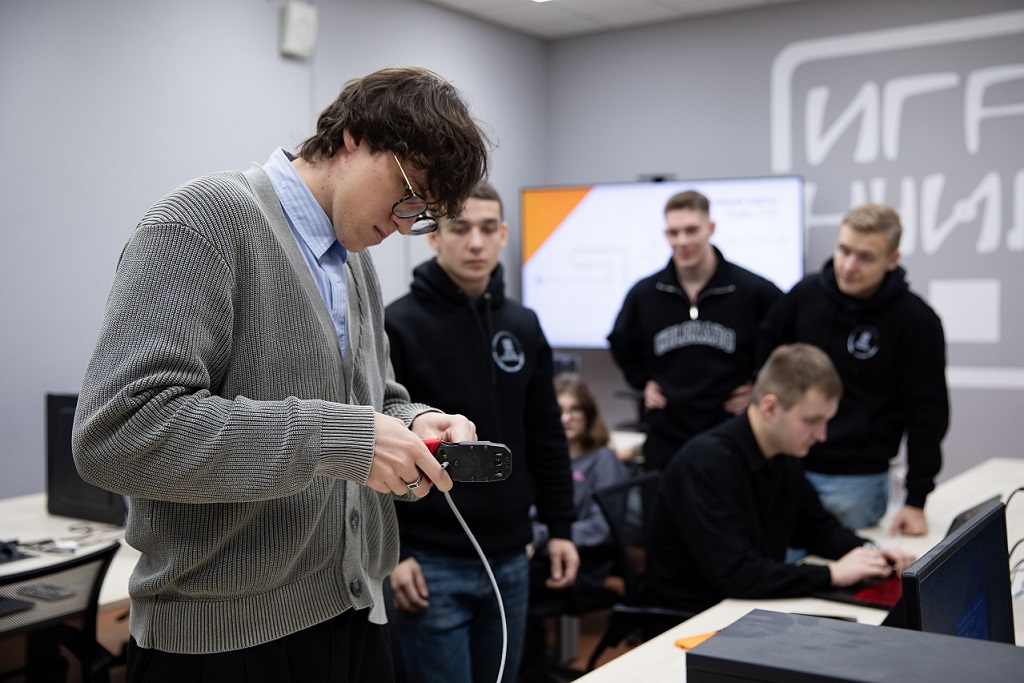
Our students are active researchers and developers who harmoniously combine hardskills with flexible skills. They actively participate in olympiads, hackathons, and scientific projects, combine practice with research and prepare for a successful career in IT sphere.
They focus not so much on the internal logic of a single program, but rather on how different components (software, hardware, networks, operating systems) interact with each other to create a reliable and efficient information system. They connect the software world with the hardware world.
After Graduation
Professional skills and competencies
Professional skills and competencies
- Develop applications in Java, C++ and Python
- Design and work with databases (PostgreSQL, MySQL, MongoDB)
- Administer UNIX infrastructures (Linux, Bash, Nginx, Systemd)
- Develop network applications and provide interactions between heterogeneous systems (TCP/IP, HTTP/HTTPS, RESTAPI, WebSocket)
- Design information systems (UML, microservice and event architectures, design patterns)
- Understanding the architecture of microprocessors and microcontrollers, the basics of digital logic, the ability to read circuits and interact with peripheral devices at a low level
- Create client-server applications (Java, RESTful services, Web sockets)
Professional Path
- Developer of enterprise software (Java, C, C++, Python)
- System architect and engineer
- Specialist in network technologies and integration of automated systems
- Embedded Systems Engineer
- Architect of information systems and analyst of complex processes
- DevOps Engineer
- Machine learning Engineer (by delving into the appropriate field)
- Continue studies in Master's and postgraduate studies
Where to realize yourself

You are the architect of the digital tomorrow. Choose the direction of "System Design and IT infrastructure": connect systems, manage complexity, exceed standards.