Machines and Highly Efficient Processes Technology
15.03.01 Mechanical Engineering

About
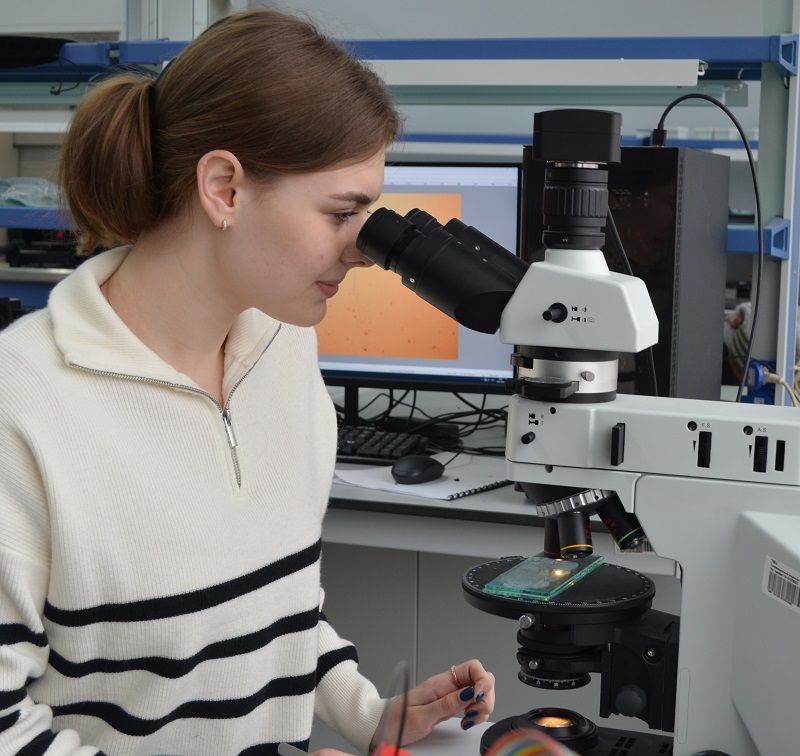
Our mission is to train an engineering elite capable of creating and managing technologies of the future, which are the basis of technological sovereignty and competitiveness of high-tech industries.
We strive to form graduates' competencies based on fundamental knowledge, practical experience and innovative thinking so that they can solve the most complex production tasks and move forward the domestic machinery industry, aerospace, medical and other key industries.
We are training a technological engineer of a wide profile, specializing in additive and high-energy processing methods. This is not just a "machine operator", but a "material architect" and "creator of the most complex parts".
A graduate of the program has a unique set of competencies:
- Knowledge of the physical and chemical basis of the processes: what happens to the material under a laser beam, in a plasma discharge or in a vacuum chamber.
- Ability to design technological processes: choose the optimal processing method, calculate modes, predict the result.
- Mastery of CAD/CAM/CAE systems: creation of 3D models, control programs for CNC machines, engineering calculations.
- Skills of working on modern equipment: from programming to maintenance and implementation of new solutions.
In professional work, our specialist solves key problems:
- Development and implementation of manufacturing technologies for parts made from superhard, refractory, and new materials (superalloys, composites, ceramics).
- Creation of prototypes and unique products that cannot be produced using traditional methods (e.g., turbine blades with cooling systems, precision microelectronic components, surgical implants with biocompatible coatings).
- Improving production efficiency: reducing manufacturing time, costsreduction and improving the quality and service life of parts.
Our graduates directly contribute to solving strategic problems:
- Technological sovereignty: Development and production of critical components for aviation, space, defense, and energy industries, independent of imports.
- Import substitution: Development of the production of highly complex components for machine tool manufacturing, machinery industry, and medicine.
- Development of the military-industrial complex and cross-cutting technologies: сreation of next-generation weapons components and components for cross-cutting NTI technologies.
- Development of a high-tech cluster: graduates become the core of innovative enterprises that attract investment and create highly productive jobs.
This program is the ideal choice for those who want to shape the future today. Here's what makes it truly appealing:
1. Work at the cutting edge of science and technology. You're not dealing with hardware, but with plasma, beams, and vacuum. These are the technologies that define Industry 4.0.
2. Creativity and the embodiment of ideas in metal. You can design a component of any complexity on a computer and literally "grow" it from nothing using a laser or create it from superhard material using electrical discharge machining. From idea to finished product - all with your own hands.
3. High demand and competitive pay. This is a highly specialized specialist, for whom the market is in huge shortage. Graduates don't look for work – work looks for them.
4. A wide range of career options. Aerospace, automotive, biomedicine, jewelry – anywhere that requires the highest precision and work with unique materials, our graduates are in demand.
5. A sense of self-worth. You understand that the component you calculated and manufactured will be at the heart of a new aircraft engine or part of a spacecraft. This gives you an incredible sense of involvement in large-scale projects.
By choosing our program, you're choosing more than just a profession. You're choosing a trajectory to become a sought-after innovative engineer whose work directly impacts technological progress and strengthens our country's position in the world.
Program Description
Our program isn't just "another mechanical engineering major." It is deeply focused and integrated training.
It offers a unique synergy of technologies, not just a collection of them. While other programs often focus on one or two technologies (for example, only "Laser Technologies" or "Pressure Processing Equipment"), we provide a comprehensive view of the entire cycle of creating a high-tech product.
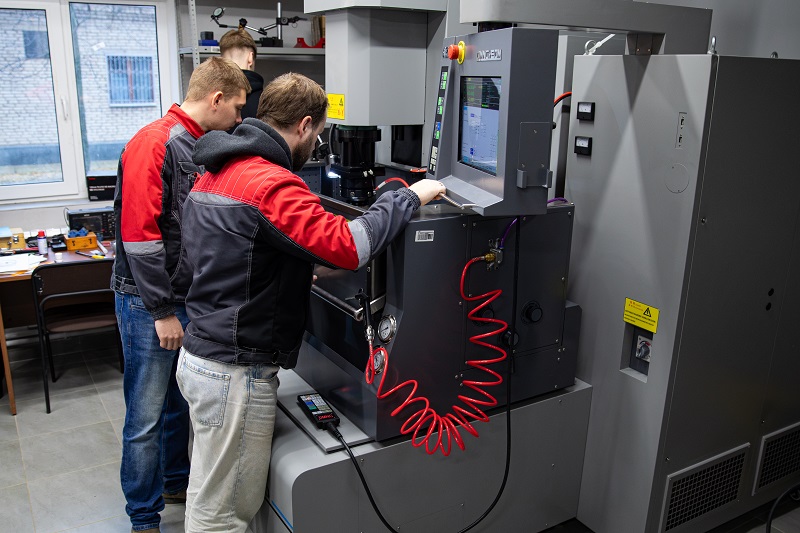
A deep dive into the physics of processes, not just the machine's buttons. We train not just operators, but developers and technology optimizers. To achieve this, we place a strong emphasis on fundamental disciplines.
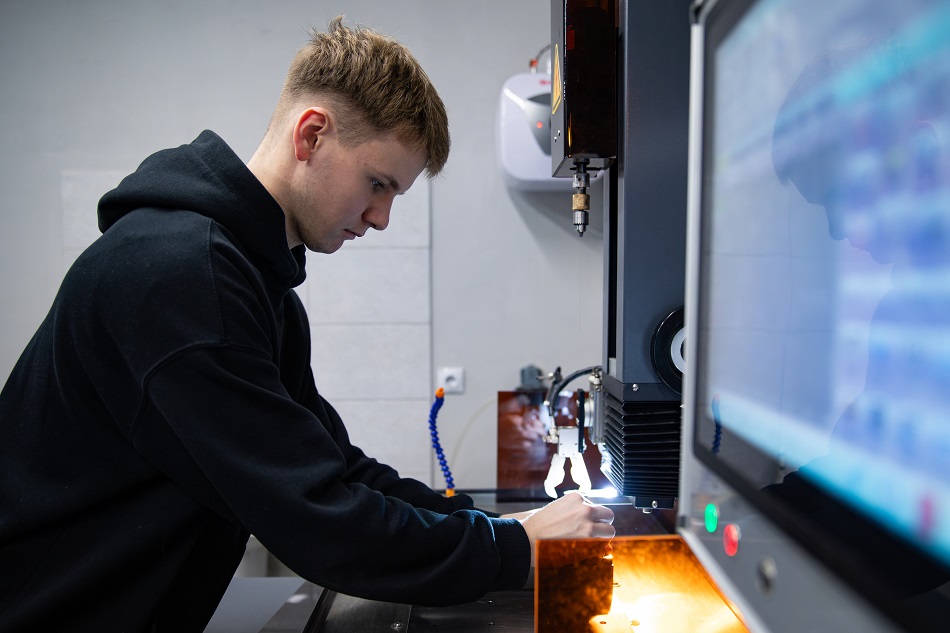
Partner network and real-world projects with leading industrial companies. Our program is built on the challenge-solution principle. From the very beginning, students work on real-world cases from our industrial partners.
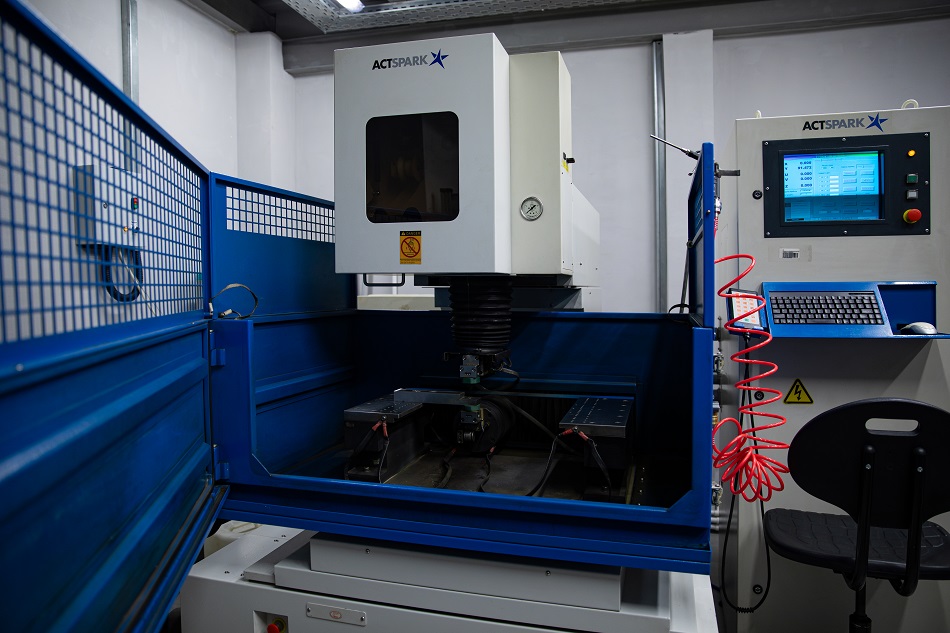
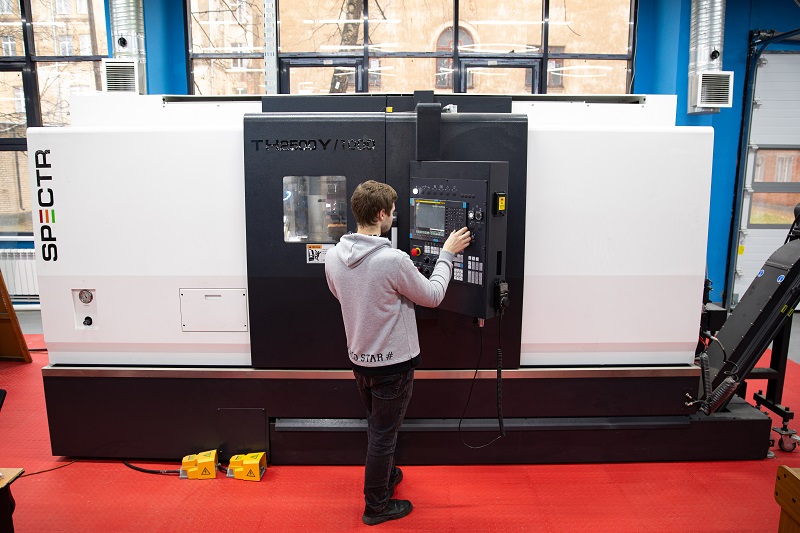
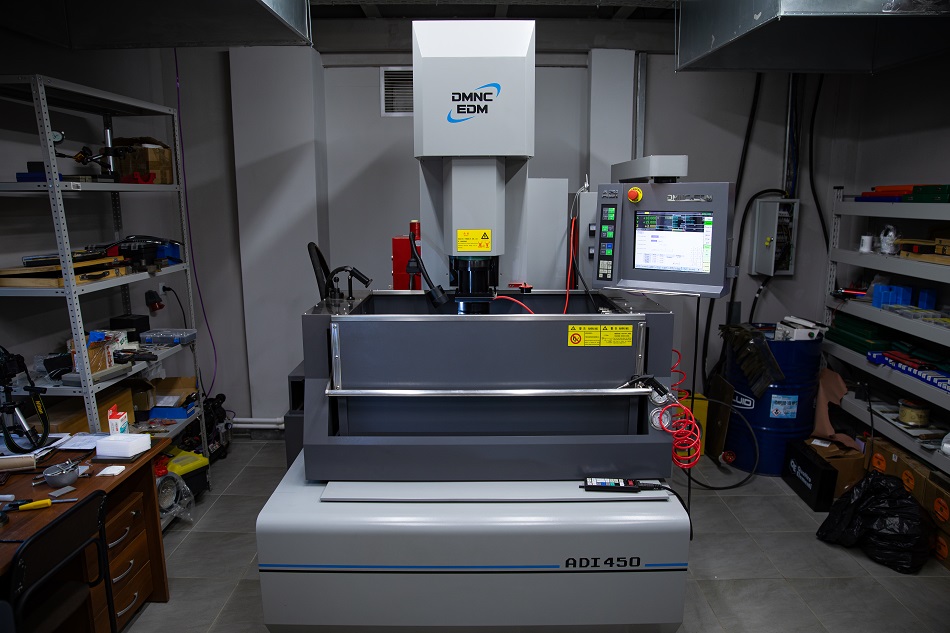
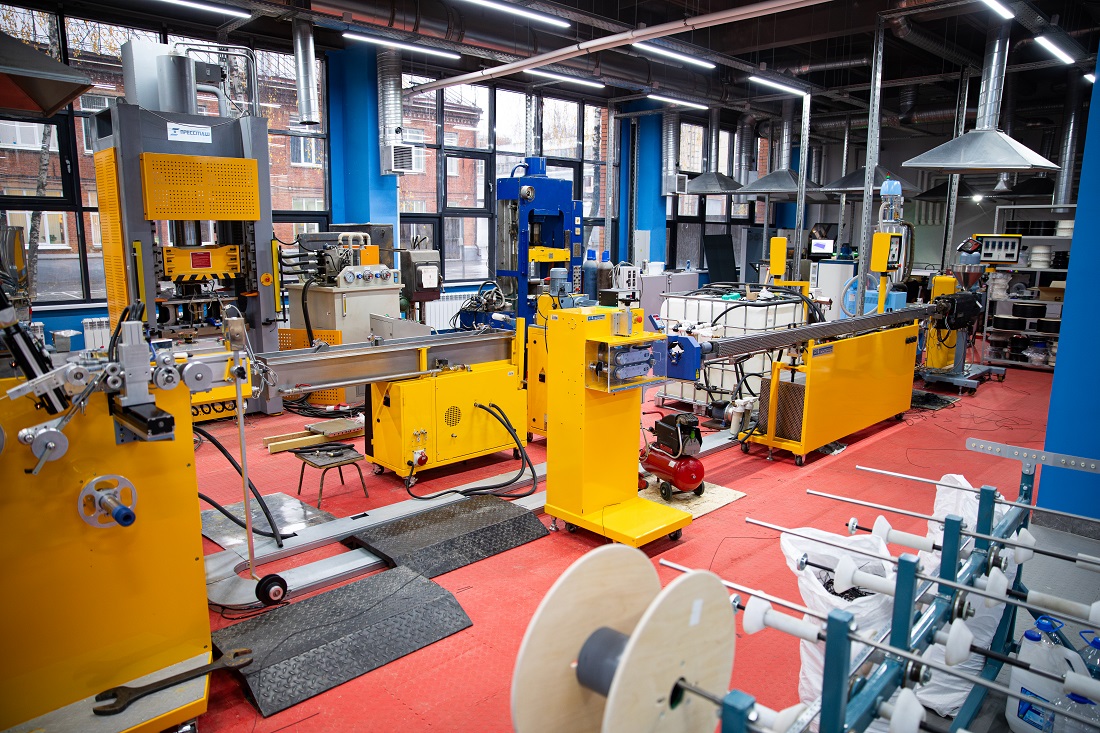
Access to unique equipment. We don't teach on outdated machines. Our technology park includes modern research instruments and production equipment.
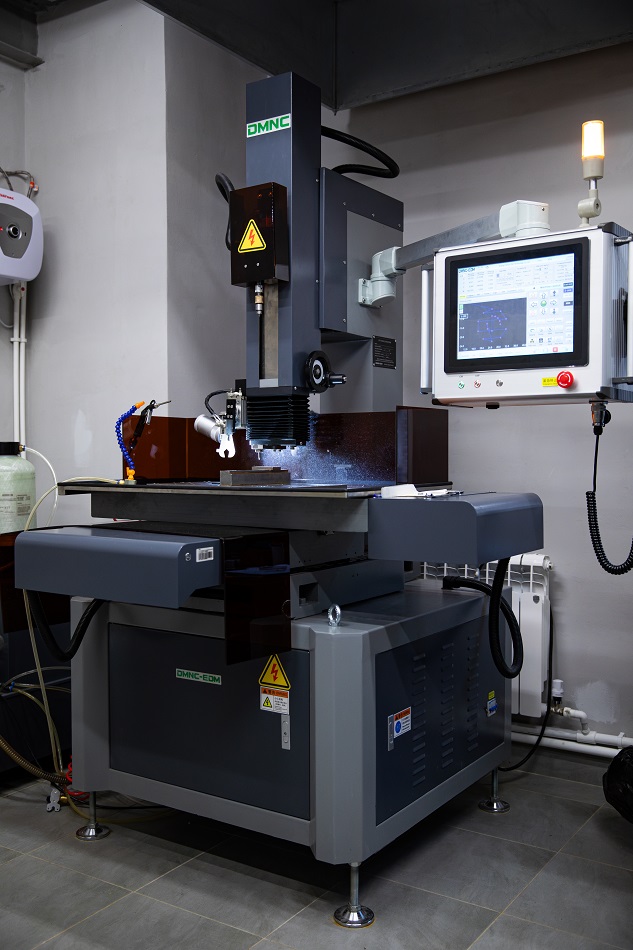
While other programs train specialists who know "how it works," our program trains those who know "how to make it work better, create something new, and solve problems that haven't been solved before." This is not just a path to a profession, it is a path to becoming a technological leader.
Head of Program
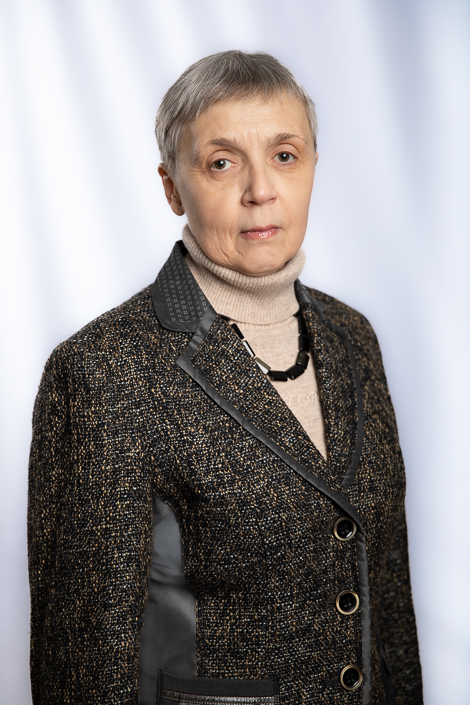
Gnidina Inna Vyacheslavovna
Candidate of Technical Sciences, Acting Head of the Department of Electrical and Nanotechnology
Author of over 140 scientific papers, 24 of which have appeared in Web of Science and Scopus publications
Area of research/professional interests: physical and technical processing technologies, polymer composite manufacturing technologies, additive technologies, 3D printing
Enrollment Plan1:
| Study mode | State-funded places | Hospital-funded place | Places for preferential categories | Places for special categories | Self-funded places |
|---|---|---|---|---|---|
Offline |
20 | 8 | 2 | 2 | 10 |
Tuition fee2:
| Study mode | Full time | Individual study path |
|---|---|---|
Full time (Offline) for the citizens of the Republic of Belarus the Republic of Kazakhstan the Republic of Kyrgyzstan the Republic of Tajikistan |
194 000 roubles per year |
- |
Full time (Offline) go the citizens of other countries |
235 000 roubles per year |
- |
Entrance examination3 (minimum score):
Mathematics (40)
Russian Language (40)
Computer Science and ICT (46) or Chemistry (40) or Physics (41)
Organising Institute:
Submission of documents for “Industrial and Special Robotics” program: +7 4872 73-44-76, e-mail: foreign@tsu.tula.ru
Submission of documents for a pre-university course of Russian: + 7 4872 73-44-76, e-mail: podfaktula@mail.ru
Training
During the first two years, students study fundamental disciplines and acquire general professional competencies, completing internships: an introductory course in the first year and a project-based course in the second year. Beginning in the third year, the curriculum focuses primarily on professional disciplines.
For their final qualifying thesis, students choose a topic offered by the company. The work is based on pre-graduation internship materials and addresses a relevant production problem. Our students, while completing their FQT, conduct research in the field of highly efficient processing processes, develop new technologies, and improve the existing ones.
We don't just impart knowledge. We create an environment where you can take risks, experiment, make mistakes, and create. We provide you with a full arsenal of tools, relations, and freedom to fully realize your talent and lead you to the career you dream of.
Key disciplines
Key disciplines
Computer Graphics in Engineering
Modern Materials in Engineering
Solid Modeling of Mechanical Engineering Objects
Additive Manufacturing in Mechanical Engineering
Electrotreatment Methods in Mechanical Engineering
Composite Materials Engineering
Computer-Aided Design Systems for Concentrated Energy Flows Processing
Reverse Engineering Technologies
Non-Contact Forming Processes and Operations
Practice
The program provides for various types of practice: educational (introductory), industrial (technological, design and engineering, research work), pre-graduation.
Practice
Partners and Employers
Students
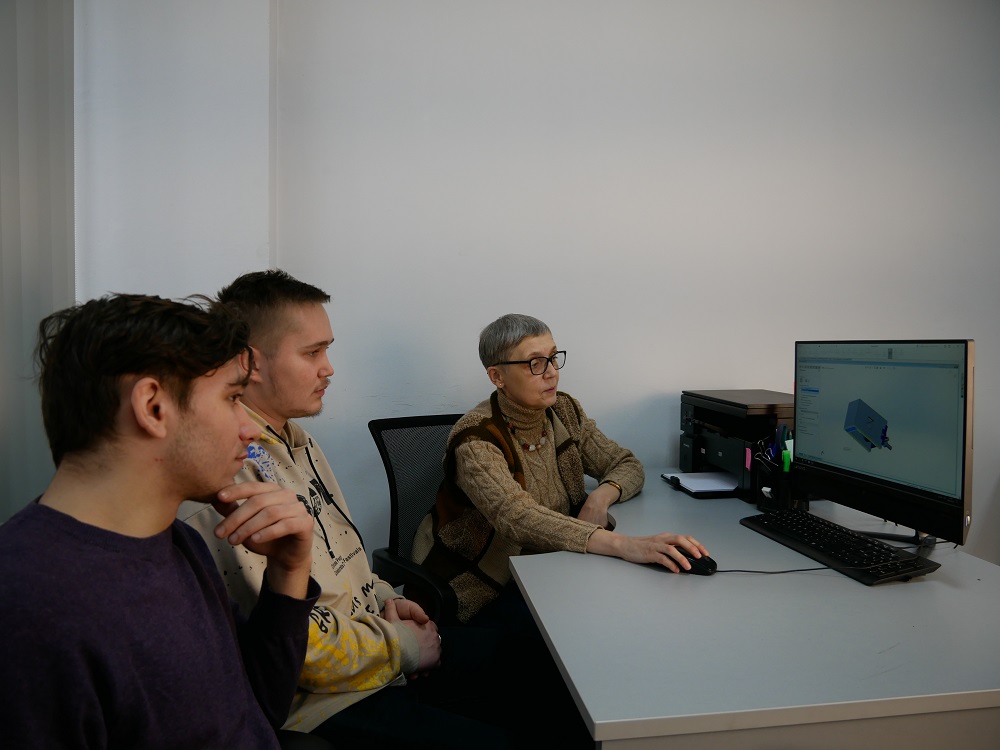
Our ideal student is not a prodigychild with memorized textbooks. It is a specific mindset and a set of qualities that we value, develop, and that are best revealed within our program.
1. He is a “want-to-know-it-all” with an engineering mindset. His first reaction to anything is not "how beautiful," but "how is this made?" and "why doesn't this break?" He sees the world as a collection of processes and mechanisms.
2. He enjoys creating things with his hands, but he is drawn to high technologies. He is not a theoretician who is satisfied with a blueprint. He values tangible results but he is not satisfied with simply hammering or filing. He is attracted with the power of a computer-controlled laser or the magic of a vacuum chamber creating ultra-thin films.
3. He is a problem solver, not a doer. When given a task, he does not look for a ready-made manual. He analyzes, proposes different approaches, takes risks, and experiments. He is not afraid of failures; he perceives them as valuable experience.
4. He possesses “triple literacy”. This is our key requirement, and it is this combination that makes him unique:
Technical/Physical Literacy: Understands fundamental laws. He is interested in why an electrical discharge can precisely cut a shape in metal.
Digital Literacy: he is not afraid of software. He is willing to spend hours figuring out CAD (design), CAM (manufacturing simulation), and CAE (engineering analysis) to ensure that a virtual model becomes a flawless instruction manual for a machine.
Material Literacy: Understands that steel, titanium, ceramics, and polymer are not just “materials” but each with its own “character”. He knows how each of them will behave under a laser beam or in a vacuum chamber.
5. He thinks ahead and wants to leave a mark. He is motivated by more than just salary and demand. He is driven by ambition - to create something that never existed before. He wants to work on projects that change the world: making airplanes lighter, engines more efficient, and medical implants more durable.
If you recognize yourself in this description, you are definitely a part of our team! You do not have to be a guru of all these technologies. Our program is designed to give you that knowledge, but if you see in yourself curiosity, a passion for creating new things, and a desire to solve complex problems, you are our ideal candidate. We will give you the tools to turn this passion into a profession like no other.
After Graduation
Professional skills and competencies
Professional skills and competencies
We train not just operators, but process engineers and researchers. Therefore, our graduates are able to do more than just press buttons; they can create and optimize technological processes.
1. End-to-end digital design and manufacturing skills (Digital Thread)
- What it is: You will learn not just to draw in CADbut to manage the entire chain: CAD (model) → CAE (analysis and optimization) → CAM (control program) → CNC machine → Finished part. You will see how design changes in 3D affect the entire subsequent manufacturing process.
- What makes it different from other programs: Many universities study these stages separately. With us, you will learn to integrate them for additive and high-energy methods, where this is critical.
2. Work skill in hybrid and combined technologies
What it is: You will gain unique experience manufacturing a single part using multiple technologies. For example, laser cladding + electrical discharge machining or 3D metal printing + vacuum deposition of a functional coating.
What makes it different: Graduates of other programs often have in-depth knowledge of a single technology. Our graduates understand how multiple technologies work together, which allows them to solve problems inaccessible to any other method.
3. High-energy processing parameter control skill ("energy play")
What it is: You will not simply select modes from a table. You will learn to precisely control key parameters using unique equipment:
- For lasers: impulse duration and shape, beam polarization.
- For electrical discharge machining: discharge shape and frequency, dielectric composition.
- For vacuum deposition: plasma control (magnetron systems), ion cleaning, and activation.
- What is different: This is not a user level, but a technology developer level. You will be able to not just replicate but to create new processing modes for new materials.
4. Precision machining and functional surface creation skills
What it is: you will learn to create not just parts, but parts with specific functional surface properties.
- Laser microtexturing to improve wettability or reduce aerodynamic drag.
- Creation of a biocompatible porous surface on titanium implants.
- Electrochemical polishing to achieve an absolutely smooth surface in hard-to-reach cavities.
- What is different: This transition from "making a mold" to "design a surface" is one of the trends of Industry 4.0.
5. Work skill of working with metamaterials and complex alloys
What it is: Youwill gain experience processing not only standard steels and alloys, but also modern materials: heat-resistant nickel alloys (such as Inconel), implantable titanium alloys, metal composites, and ceramics. You will understand their behavior under various types of stress.
What is different: This is a direct path to the most advanced manufacturing (aerospace, medicine), where these expensive and complex materials are used.
Professional Path
Career Opportunities
By graduating from our program, you enter not just the job marketbut a market of opportunities. Your competencies allow you to choose from a variety of career paths, each leading to an interesting, highly rewarding, and meaningful career.
You will be in demand in any industry that requires the creation of complex, precise, and critical products:
Aviation and Space Industry
Military-Industrial Complex
Energy and Heavy Machinery
Medicine and Biotechnology
Science and Research
Own business (Technology entrepreneurship)
We are laying a solid foundation for continuous growth.
Master's and postgraduate programs: You can deepen your knowledge in our program or in leading Russian master's programs (Bauman Moscow State Technical University, Moscow Institute of Physics and Technology, St. Petersburg Polytechnic University) in the fields of “Additive Manufacturing”, “Materials Science”, and “Laser Technologies”. For a scientific career, you can enroll in graduate school and then defend a PhD dissertation in mechanical engineering, physics, or chemistry.
Continuing professional education (CPE): Short programs for highly specialized skills: “Additive Manufacturing in Mechanical Engineering”, “New Composite and Functional Materials”.
Entry-level positions (after a bachelor's degree): Process Engineer, Design Engineer, CAD/CAM/CAE Specialist, Research Engineer
Positions after 3-5 years of experience (or after Master's degree): Lead Process Engineer, R&D Engineer, New Equipment Implementation Specialist, Project Manager
Perspective goals: Head of a Technology Bureau/Department, Chief Technologist of a company, Head of an Additive Manufacturing Center, Technical Director, Owner of an engineering company
Where to realize yourself
If you look at complex mechanisms and see not just hardware, but engineering thought in action...
If your hands burn with desire not just to assemble, but to create - to build something impossible with ordinary tools...
If you want your resume after graduation to say not “looking for a job”, but “choosing the best offer” from leaders in aerospace, medicine, and IT... This is your place.
We don't promise easy learning. We promise access to knowledge and technologies that change your perception of what's possible.