Industrial and Special Robotics
15.03.06 Mechatronics and Robotics
About
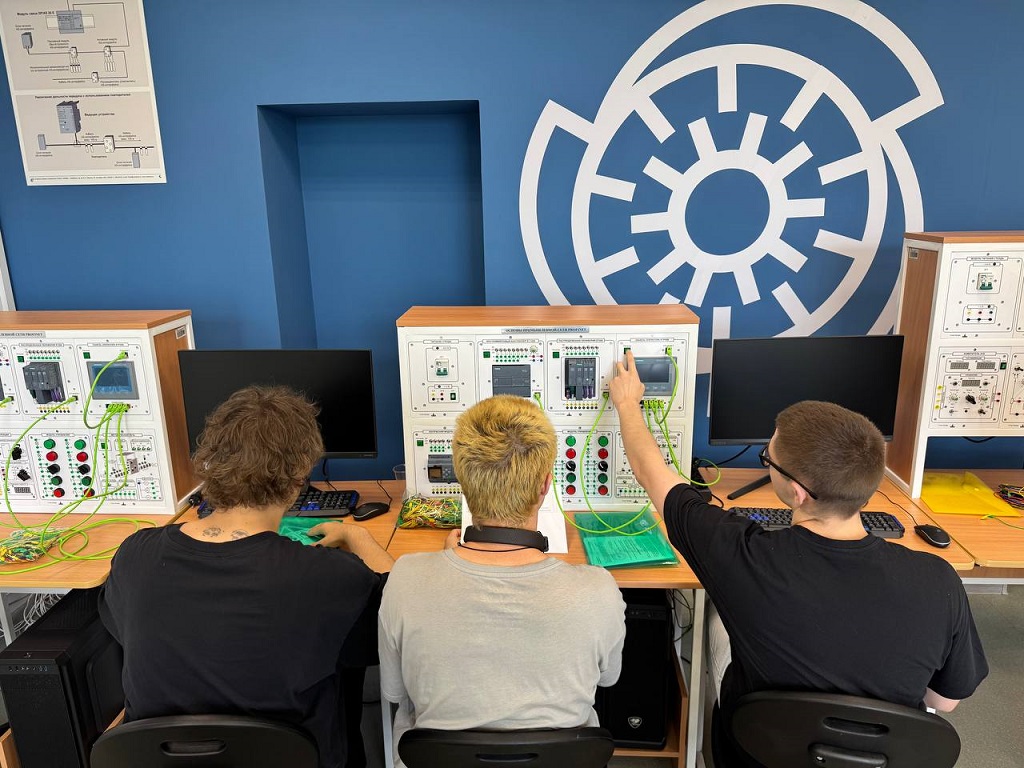
We teach students how to design, construct, program, test, and maintain industrial and mobile robots. To do this requires knowledge in the fields of Robotics, Computer Vision, Artificial Intelligence, Precision Mechanics, Electronics, and Programming. The main content of the program consists of courses in these areas, but our students also master the methods of creating conceptual and technical projects of industrial robots, mainly in practice.
We have structured the studying process so that graduates can choose who they want to work with: a designer of industrial robotics or home robots, a design engineer or an industrial programmer, specializing in robotics, automated control systems or electronics.
Program Description
Classes are held in small groups, so teachers can see the progress of each student, help and guide individually.
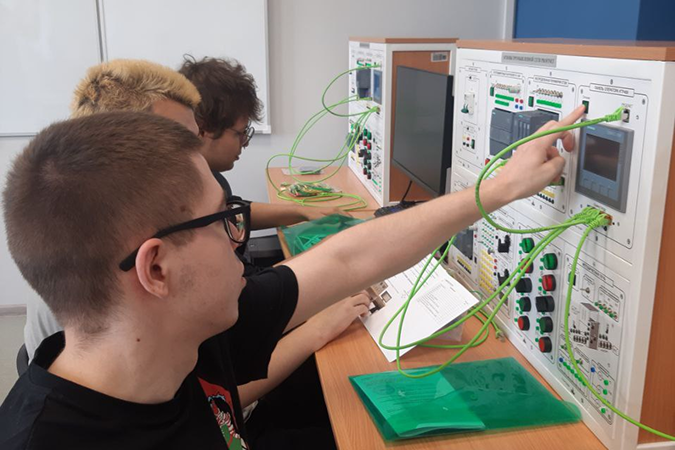
Students participate in case-tournaments held by industrial partners and develop robotic products and technologies under the guidance of teachers.
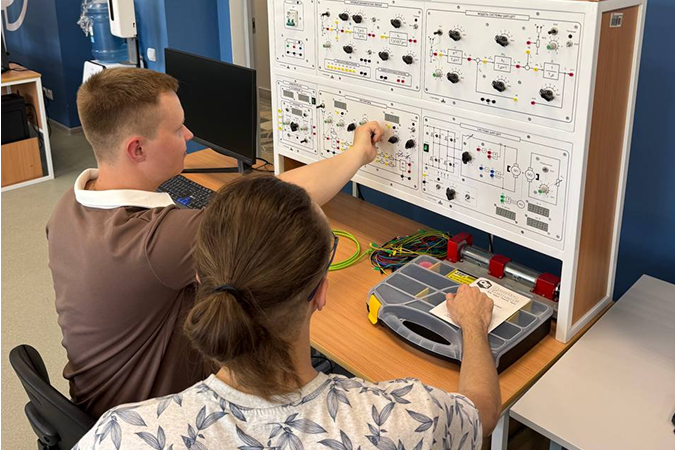
Students have the opportunity to complete paid internships with industrial partners and gain real-world work experience.
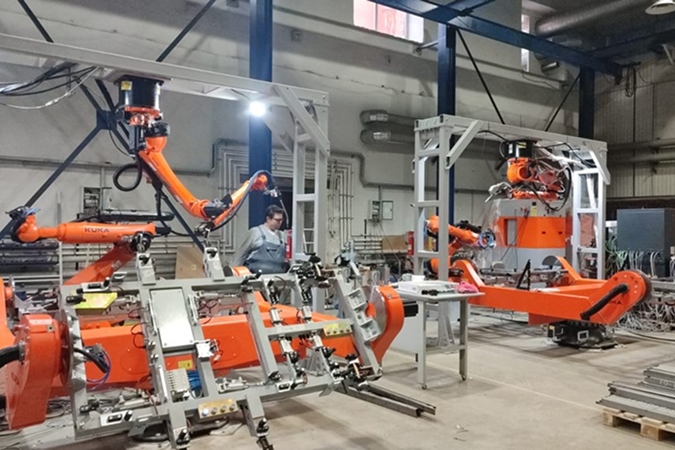

Head of Program
Tatyana Alekseevna Akimenko
Candidate of Technical Sciences, Associate Professor, Department of Industrial Automation and Robotics
Research/professional interests: mobile robots, computer technologies in automation and control, and mobile robot control. Main research interests: development of thermal imaging and thermal process generation systems in technical systems; management of information processes and systems.
Enrollment Plan1:
| Study mode | State-funded places | Hospital-funded place | Places for preferential categories | Places for special categories | Self-funded places |
|---|---|---|---|---|---|
Offline |
25 | 5 | 3 | 3 | 15 |
Tuition fee2:
| Study mode | Full time | Individual study path |
|---|---|---|
Full Time (Offline) for the citizens of the Republic of Belarus, the Republic of Kazakhstan, the Republic of Kyrgyzstan, the Republic of Tajikistan |
194 000 roubles per year |
- |
Full time (Offline) go the citizens of other countries |
235 000 roubles per year |
- |
Entrance examination3 (minimum score):
Mathematics (40)
Russian Language (40)
Computer Science and ICT (46) or Chemistry (40) or Physics (41)
Organising Institute:
Submission of documents for “Industrial and Special Robotics” program: +7 4872 73-44-76, e-mail: foreign@tsu.tula.ru
Submission of documents for a pre-university course of Russian: + 7 4872 73-44-76, e-mail: podfaktula@mail.ru
Training
For the first two years, students study fundamental disciplines, gain general professional competencies, and undergo practices: introductory practice in the first year, design and technology practice in the second year. Since the third year, the schedule includes mainly professional subjects.
For the final qualifying thesis (FQT), the student chooses a topic proposed by the company. The work is carried out on the basis of materials from pre-graduate practice and solves an actual production task. Our students, while doing their research, designed various modules of robotic systems (gripping, extending, lifting), developed software and information systems.
Key disciplines
Key disciplines
- Microprocessor-Based Robot Control Systems
- Mobile Robots
- Electronics and Electronic Devices in Robotics
- Mechanics and Construction of Robots
- Drives of Robots and Robotic Systems
- Control of Robots and Robotic Systems
- Robot Sensing Systems
- Technical Vision
- Digitalization of Processes and Productions
Practice
The program provides for various types of practice: educational (introductory), production (technological, design, research), pre-graduate.
Practice
Partners and Employers
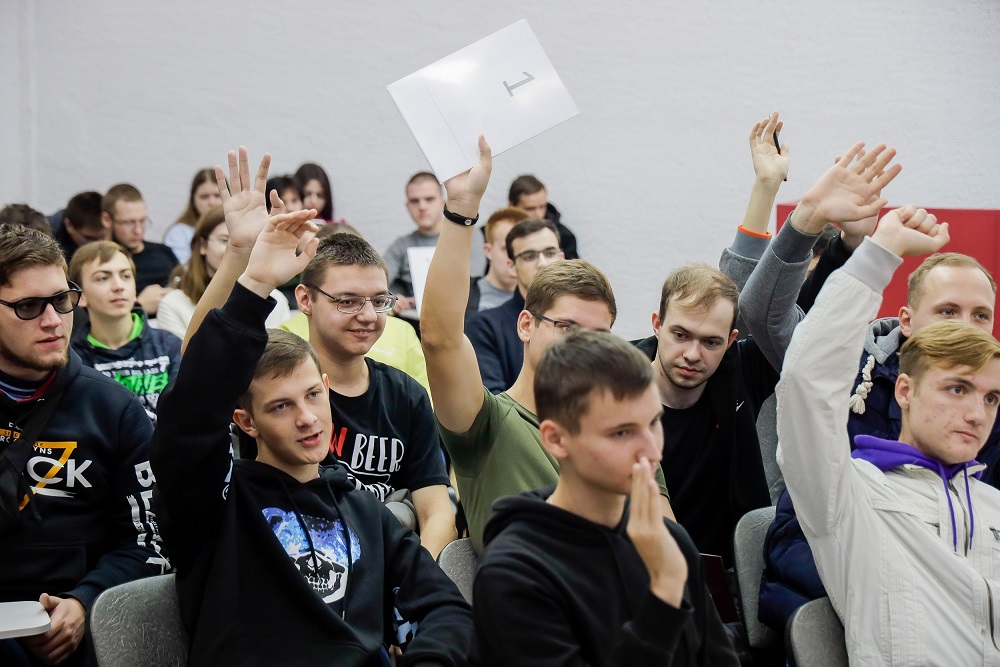
Students
Our students are interested in engineering, programming and information technology. They have analytical skills, ready to learn new things constantly and are able to work in a team and generate ideas.
After Graduation
Professional skills and competencies
Professional skills and competencies
- Knowledge in the field of mechatronic systems designs, computer vision and object recognition, mechanisms and algorithms for object manipulation, sensors and obstacle detection.
- Development of machine learning algorithms and models for autonomous decision-making, control and adaptation of robots in various situations.
- Methods of designing industrial and mobile robots, mechatronic control systems using advanced technologies and software.
- Automation and robotization of production processes.
Professional Path
- Design bureaus: developer of automated systems and controls, robot technician, electronics engineer.
- Industrial enterprises (military-industrial complex, oil and gas production and mining, mechanical engineering, metallurgy, construction).
- Scientific and production companies that develop new types of equipment (robots for various purposes, drones, “smart” systems).
Where to realize yourself
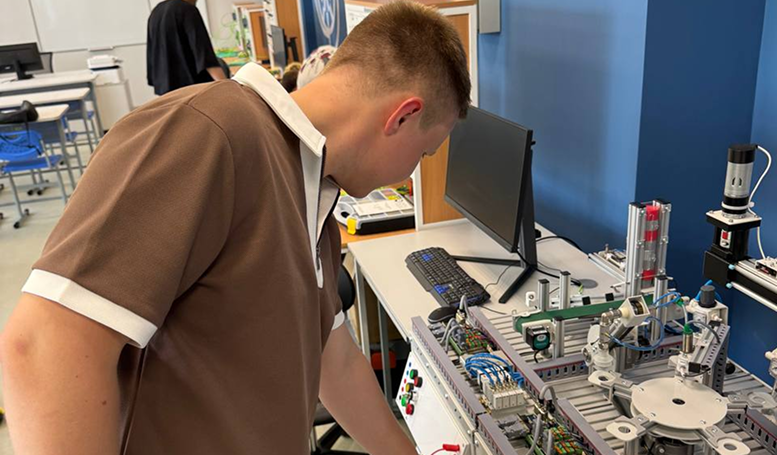
Robotics is the science of “everything”, as mechatronic and robotic systems are used everywhere, from the design of space stations to the production of sports equipment. Development of artificial intelligence and the Internet of Things technologies further expand its capabilities and prospects for your implementation.